Copyright © 2026 Dairy Farmers of Canada. All rights reserved.

Are you in GeoProvince?

Your IP address says that you are in GeoProvince. This page is meant for residents of SiteProvince. We recommend you use GeoTitle instead.

Supporting young eaters

November 12, 2026

10 minutes

Early Learning

Grades K to 3

Grades 4 to 6

Grades 7 to 9

Grades 10 to 12

Five Ways to Support a Food-Neutral Approach in Your Classroom

Food comes up all the time in classrooms—at snack tables, during celebrations, and in everyday conversations. Talking about food can sometimes feel tricky, but when students feel safe and supported, they’re more likely to explore, enjoy a variety of foods, and build confidence in their choices. That’s where a food-neutral approach can help.

By being intentional about how food is talked about and explored, educators and school staff can help create spaces where students feel included, supported, and curious about food and eating, in the classroom and beyond.

star

Highlights

  • Learn what a food-neutral approach is and how it can support inclusive, respectful food conversations
  • Discover five practical ways to bring food neutrality into your classroom
  • Explore how food-neutral environments can build food literacy, confidence and well-being
Five Ways to Support a Food-Neutral Approach in Your Classroom

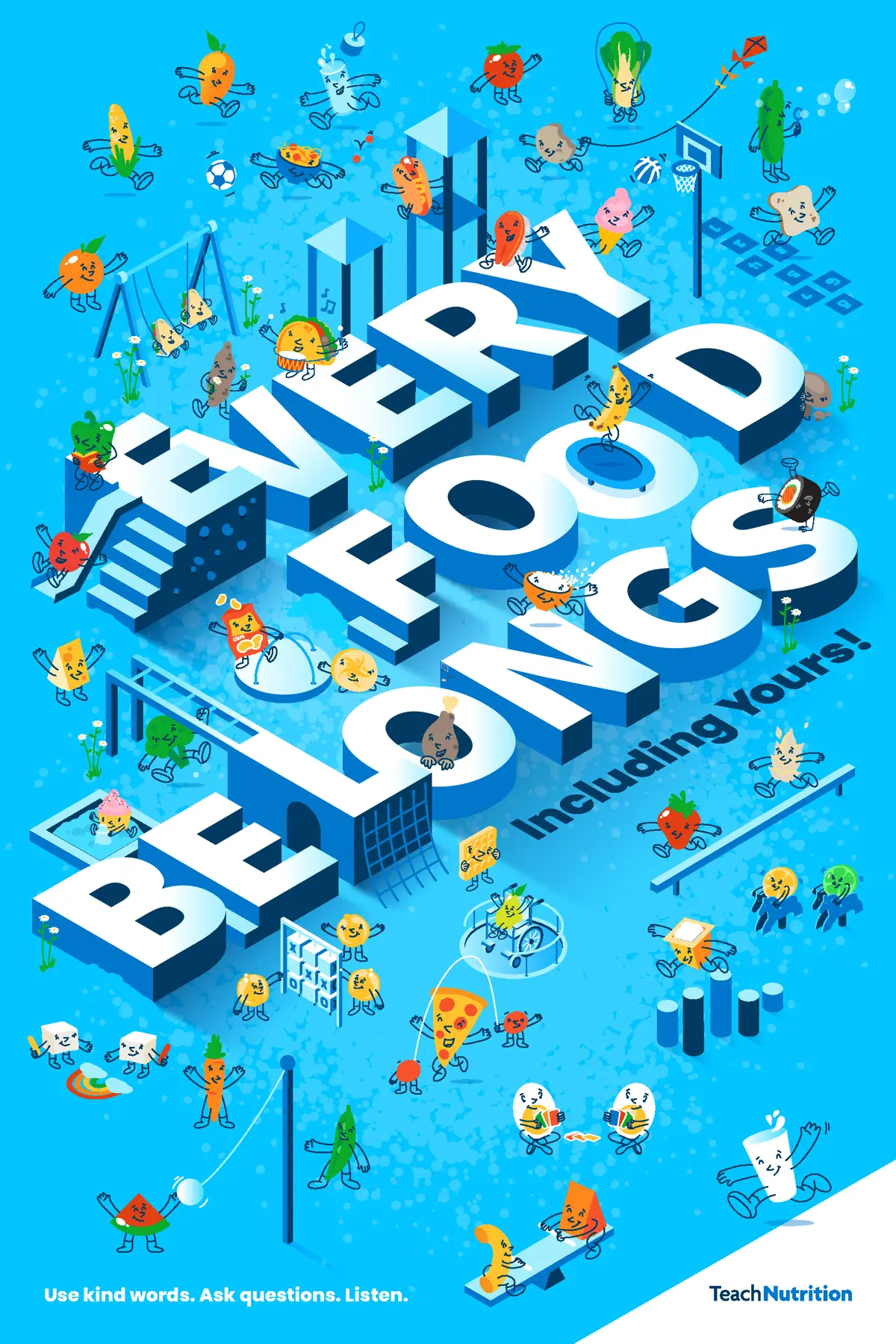
At Teach Nutrition, food neutrality means we use respectful, curious language and explore food in a way that helps children, youth, and their families feel included.

This means referring to foods by their names rather than using labels such as “good” or “bad.” The language we choose actively shapes how children and youth feel about food and about themselves.

Food neutrality does not mean all foods are the same. It means food can be explored through factors such as access, body needs, connection, culture, enjoyment, nutrition, and tradition without judgement, hierarchy, or shame.

5 ideas to support a food-neutral approach in your classroom

There are so many ways to practice food neutrality, and you’re probably already applying some of them! Wherever you’re at, don’t feel that you need to try everything at once. Start with one or two ideas: 

Five Ways to Support a Food-Neutral Approach in Your Classroom

1. Be intentional with food language

  • Call food by its name instead of grouping it into “good/bad” or “healthy/unhealthy” categories. A chocolate bar is a chocolate bar, and an apple is an apple.
  • Use neutral, curious language that fits the age and learning context. Younger students might explore foods through colour, texture, smell or flavour. For example, bread can be soft or chewy and slightly sweet or nutty. Older students might discuss food preferences, culture, cooking methods or the role foods play in meals and traditions without ranking or judging them.

2. Model relaxed, enjoyable eating

  • Approach eating with flexibility and enjoyment. Students learn a lot by observing the adults around them, including how we talk about our own food choices, bodies and appetites.
  • Avoid making comments that frame eating as something to “make up for” or “earn.” For example, instead of saying, “I’m avoiding carbs today,” or “I’ll need to work this off later,” you might simply say, “This lunch looks satisfying,” or “I’m really enjoying this today.”

3. Support student autonomy

  • Encourage kids to play their “mealtime roles.” The Satter Division of Responsibility in Feeding can be a helpful guide: adults decide where and when foods are served, and children decide how much to eat from the food available and in what order. This approach supports children’s autonomy and confidence with eating, while still providing structure and predictability. 
  • Recognize that this approach may feel tricky at first, and that it’s okay! Children might eat their cookies before their sandwiches or choose to eat a larger snack and a smaller lunch. Let them play their roles and choose how much and in what order to eat.

4. Expand the conversation beyond nutrients

Use Canada’s Food Guide (CFG) as one of your teaching tools and bring a food-neutral approach into your lessons. CFG doesn’t show every food students eat, enjoy or have access to, and this can be a meaningful opportunity to expand the conversation. Food choices are influenced by many factors, including culture, traditions, cost, availability, time and personal preference. 

Ask questions such as “What foods do you enjoy that aren’t shown here?” or “What makes those foods meaningful or enjoyable for you?” These questions help students see that food is about more than nutrients.

  • Review your nutrition materials (books, posters, lesson plans) looking for moral or judgmental language and ideas about food.
  • Consider making edits to resources or adding some that use an inclusive, food-neutral approach.

The bigger impact: Food literacy, confidence and well-being

The way we talk about food can have a big impact. Food-neutral classrooms play an important role in developing food literacy and in building eating competence. But the benefits go beyond children’s experience of food. They extend to their overall well-being, including their sense of belonging and mental health.

By creating a positive, food-neutral environment, you’re not just teaching about food. You’re helping kids build confidence, curiosity and a lifelong positive relationship with eating.

Download your free resource  

Need some guidance on how to approach conversations around food and eating with students? The “Let’s Talk About Food” resource will give you practical examples of how to have inclusive and respectful conversations around all foods with your students.  

Download now

All Levels

Lunch and Snack Resources for Schools & Families

🎒 Find lunch and snack resources for teachers, early childhood educators, and families —[...]
Learn More

All Levels

Classroom Kitchen

Bring food exploration into your classroom or early learning environment with recipes desi[...]
Learn More

Grades K to 3

Grades 4 to 6

Grades 7 to 9

Grades 10 to 12

Canada’s Food Guide in Action Videos

Canada’s Food Guide (CFG) is made up of many different components. One such component[...]
Learn More
Learn More

Grades K to 3

Grades 4 to 6

Food Bingo

This unique bingo game is fun, yet educational. It explores foods grown and produced in Ca[...]
Learn More

Early Learning

Grades K to 3

Grades 4 to 6

School Lunch Tips

Whether you're just getting started or looking to make your routine easier, we’ve got you[...]
Learn More

Grades K to 3

Grades 4 to 6

Grades 7 to 9

Grades 10 to 12

Let's Talk About Food in Schools: Handout

Need some guidance on how to approach conversations around food and eating with students?[...]
Learn More
Learn More

Grades K to 3

Food Explorers - Alberta & Saskatchewan

This Food Explorer Kit is designed for Alberta and Saskatchewan educators. Order your kit[...]
Learn More
Learn More

Grades K to 3

Grades 4 to 6

Mealtime Roles in Elementary School Poster

Support students in learning to eat well and help everyone relax and enjoy meals and snack[...]
Learn More